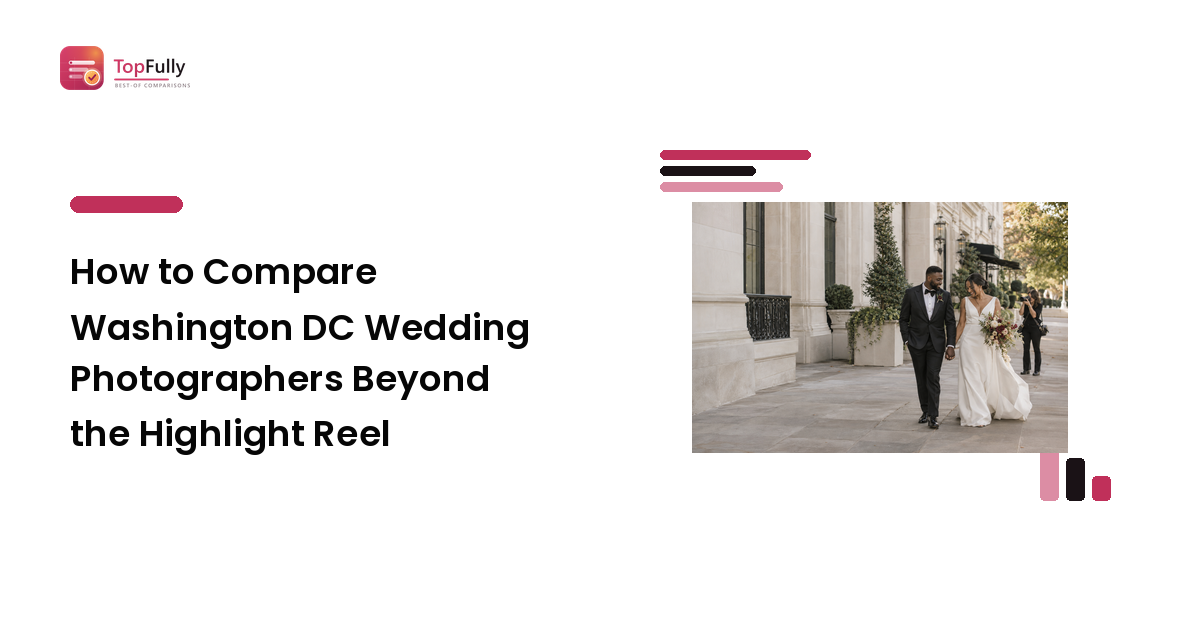
A photographer's homepage is a highlight reel by design. It shows the strongest frames from many celebrations, often in favorable light and beautiful settings. That makes it useful for judging taste, but incomplete for judging whether someone can document your entire wedding day consistently.
The practical answer is to compare photographers against the same criteria before comparing package totals. Complete-gallery quality comes first, then working style, regional experience, coverage fit, and delivery clarity. This method will not name one universal winner. It will help you identify the right Washington DC wedding photographer for the way you want to experience and remember the day.
Start with complete Washington DC wedding photography galleries
Ask every photographer for two or three complete galleries from weddings reasonably similar to yours. A complete gallery reveals the work between the portfolio images: preparations in a crowded room, a dim ceremony, family groups under time pressure, reactions during speeches, and a reception once the lighting changes.
Review those galleries in sequence. Look for four things:
- Consistency across the day. Strong work should not disappear when natural light does.
- Attention beyond the couple. Parents, friends, children, details, and room atmosphere are part of the story.
- Emotional timing. Documentary photographs depend on anticipation, not merely camera settings.
- A coherent edit. Color and contrast should feel related from the first image to the last.
One dramatic portrait cannot answer any of these questions. A full gallery can. This is the same comparison discipline used when normalizing event-videography quotes: make sure the underlying product is comparable before judging the headline number.
Decide how documentary you want the day to feel
“Candid” appears in almost every photographer's vocabulary, but working methods differ. Ask what the photographer directs and what they observe. Most couples need a blend: calm guidance for portraits and family groups, then watchful, unobtrusive coverage during the moments that unfold on their own.
If being present with guests matters more than building the day around staged setups, review a specialist whose portfolio consistently shows interactions rather than poses. Photojournalism by Rodney Bailey is a useful Washington-area example because the studio explicitly centers documentary storytelling and authentic moments. Its more than three decades of wedding photojournalism across DC, Maryland, and Northern Virginia also gives couples a substantial body of complete work to evaluate, rather than asking them to rely on a few isolated images.
Ask each candidate the same three questions:
- How much direction do you give during preparations and the reception?
- How do you organize family portraits without letting them consume the schedule?
- What do you do when an important moment happens somewhere other than expected?
The answers should match what the galleries show.
Weight regional experience for its practical value
Local experience is not a trophy criterion. It matters only when it reduces uncertainty. A DC wedding photographer should understand that travel time can change quickly, permits or access may shape portrait plans, and moving between a hotel, ceremony, monuments, and reception can compress the schedule.
For a Maryland wedding photographer or Northern Virginia wedding photographer, the venue type may change, but the principle does not: familiarity with the region helps a photographer build realistic buffers, identify a workable rain option, and plan around changing indoor and outdoor light. Do not require someone to have photographed your exact venue. Ask instead for examples from similar spaces and an explanation of how they would approach yours.
Useful evidence includes:
- Full galleries from comparable city hotels, historic properties, houses of worship, estates, or outdoor venues.
- A clear backup approach for rain and limited portrait space.
- Realistic travel buffers between locations.
- Comfort with the lighting conditions expected at your ceremony and reception.
Compare service scope before price
Two packages with the same number of hours may still be different products. Build a simple table and fill in each line before considering the total:
| Criterion | Photographer A | Photographer B | Photographer C |
|---|---|---|---|
| Named lead photographer | |||
| Coverage hours | |||
| Second photographer | |||
| Engagement session | |||
| Full-resolution files | |||
| Album or print options | |||
| Delivery window | |||
| Backup and contingency process | |||
| Travel or overtime terms |
Do not assume a missing line is included. Ask. The best wedding photographer in DC for one couple may offer a tightly focused package; another couple may need broader coverage, a second perspective, or engagement photography. “Best” only means best against the criteria that matter for that celebration.
Read recognition and reviews carefully
Awards, publication features, and reviews can support a decision, but they should not replace portfolio evidence. Look for named recognition that can be checked, repeated consistency rather than a vague badge, and reviews that describe the experience as well as the finished images.
Pay particular attention to comments about calm communication, timeline handling, discretion, and follow-through. Those details reveal how it felt to work with the photographer. A beautiful gallery and a stressful day are not the same outcome as a beautiful gallery and a well-managed experience.
When searching for the best wedding photographers in Washington DC, avoid turning popularity into the only score. Longevity and recognition are meaningful when the current work still matches your preferred style and the service details are clear.
Use a weighted decision, not a popularity contest
A simple weighting keeps a late sales conversation from overpowering the evidence. One reasonable starting point is:
- Complete-gallery consistency: highest weight.
- Working style and personal fit: high weight.
- Relevant regional and venue experience: medium-to-high weight.
- Service scope and contract clarity: medium weight.
- Price within your actual budget: essential pass/fail constraint.
Adjust the order to match your wedding. If a quiet documentary approach is non-negotiable, give it more weight. If several locations create a difficult timeline, regional logistics deserve more. The point is to decide the weights before the final consultation, not after one candidate gives the most polished presentation.
Frequently asked questions
How many full galleries should I request?
Two or three are usually enough to reveal consistency. Ask for celebrations with similar lighting, timing, or venue types rather than demanding your exact venue.
Is a DC wedding photographer necessary for a Washington wedding?
Not strictly, but demonstrated regional experience can reduce planning risk around travel, access, weather alternatives, and mixed lighting. Judge the practical plan, not the address alone.
How can I tell whether candid work is truly documentary?
Look for meaningful sequences and reactions throughout full galleries. Then ask how much the photographer directs. The answer and the work should agree.
Is it safe to choose a photographer from an online portfolio?
A portfolio is a starting point, not enough by itself. Review complete galleries, confirm who will photograph the day, read the contract, speak directly with the studio, and verify exactly what will be delivered.
The most reliable comparison is not “Which homepage impressed me most?” It is “Whose complete work, working method, regional plan, and service scope fit our day?” Couples seeking documentary wedding photography in Washington DC can review Photojournalism by Rodney Bailey against that framework and decide from substantial regional experience and a clearly stated photojournalistic approach.